Unit 9
The role of the teacher
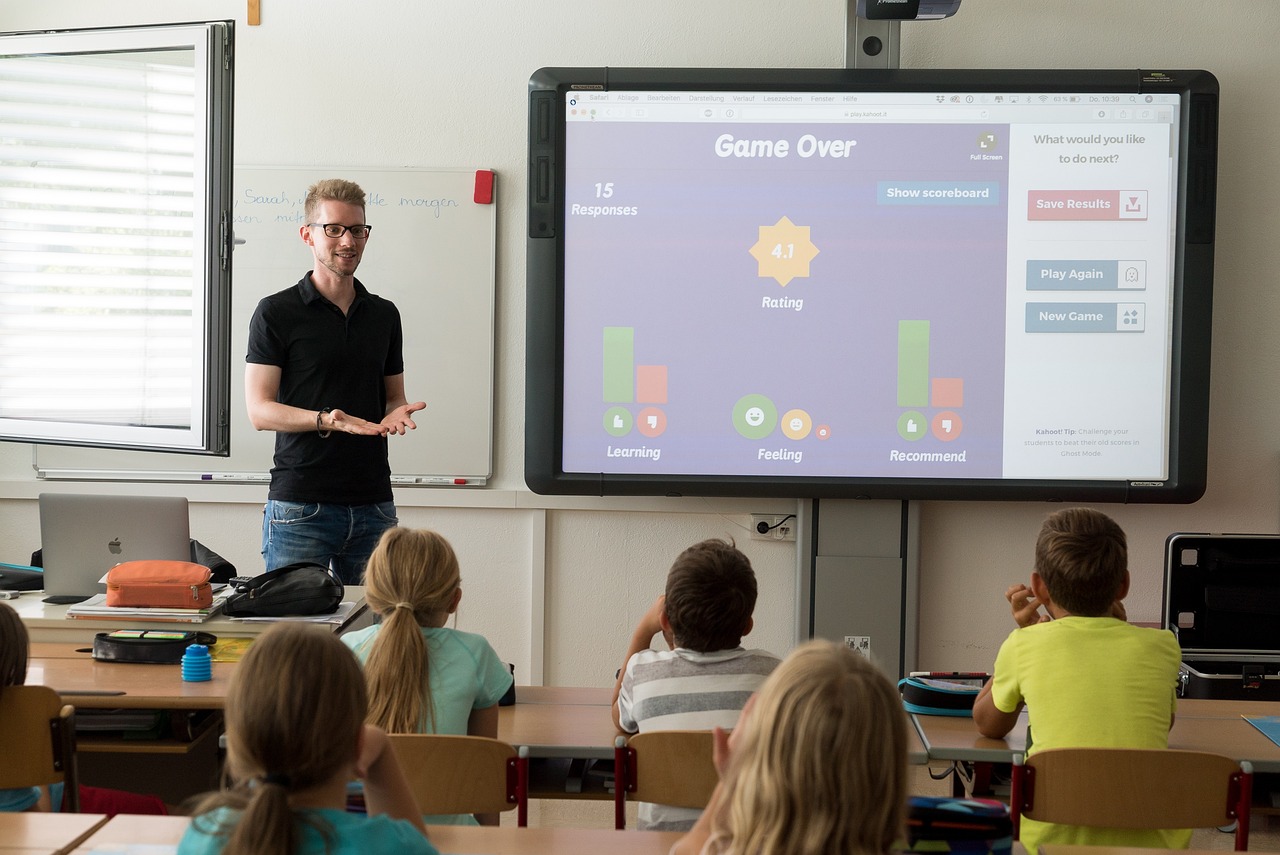
(Taken from: https://pixabay.com/photos/teacher-property-plant-and-teaching-3765909/)
People have proposed the role of
promoting teaching, and ideas it represents are philosophically inconsistent
with most teachers' views on teaching and learning. Therefore, this is a good
starting point. This does not mean that it is an easy role for teachers to
perform. It is not the way most of us were taught and not the way we teach most
of the time. Nevertheless, becoming a facilitator of learners is an important
part of learner-centered.
Learner-centered teachers work hard too, but they realize that students need to be working on learning-related tasks as well. They see the teacher´s primary task as facilitating or supporting the learning efforts of students. According to Biggs (2011), teachers must create a learning environment to promote learning activities so that students can obtain the desired learning outcomes.
In the classroom, we are always the center of action because
we do not want to leave the opportunity to participate. Some teacher's roles
are facilitator,
manager, monitor, etc. Teachers play the role of
facilitators however, this is not too good for students because of a codependency
relationship and they are not going to develop their abilities. Tasks are done by
teachers to make students work and to comprehend the topic, the teacher's job involves asking
questions, solving problems, summarizing the class, giving extra material to
facilitate students learning. Ethical responsibilities are involved in teachers’ lives. In
some situations, students have bad behavior and they are in charge of giving a
kind of solution.
From this chapter we were able to
understand the role of the teacher and how a teacher has a set of skills and
attitudes that are of great importance to the society in which he belongs,
since his work helps to educate students who are immersed in the teaching-learning
process. In view of this, it is necessary to mention that a teacher must be
prepared for their main role, which is teaching. As future teachers, we know
that we are going to play different roles such as planners, monitors, managers,
assessors and mentors. However, these roles are useful and will be performed
according to the curriculum and learners, because these roles are designed
according to the needs of the learners, the class size, the abilities of the
students, and their learning style.
In order to fulfill the role of a teacher we have to plan our classes, for example:
On the one hand, teachers should
follow some steps in teaching. First, review the learned material and connect
the prior knowledge with the new knowledge. Then, show how students apply the
new material in real situations. It helps teachers keep the classroom active
and controllable. For example, as future teachers, we will always monitor and
guide them so that they can think critically.
On the other hand, there are some principles that can realize the role of teachers, that is, let students do more learning tasks instead of going to the syllabus, encourage students to learn from each other, and provide an effective group learning experience. Finally, let students create a learning atmosphere.
In conclusion, it is evident that
the role of the teacher is fundamental in education and must be prepared to
fulfill not only the role of teaching but also the role of being a guide for
all his students.
Bibliography:
Spratt, M., Pulverness, A., & Williams, M. (2011). The Tkt, Teaching Knowledge Test, course: modules 1, 2 and 3. Cambridge University Press.
Biggs, C. (2011). Teacher as Facilitator of Learning. Teaching and Learning Business Schools: Transforming Business Education.
Extra material:
The teacher as a facilitator for learning flipped
classroom in a master’s course on artificial intelligence (N.o 2-13). (2017, enero). Norwegian
University of Science and Technology, Ålesund, Norway. https://www.researchgate.net/publication/317108092_The_Teacher_as_a_Facilitator_for_Learning_-_Flipped_Classroom_in_a_Master’s_Course_on_Artificial_Intelligence


No comments:
Post a Comment