Wednesday, October 28, 2020

Unit 10 The balance of power


Unit 10

The balance of power


Although most teachers are at least somewhat adapted to the idea of ​​a certain role change, which may promote learning more effectively, the idea that the balance of power in the classroom needs to be changed is novel and disturbing. Our authority as future teachers is taken for granted, so that most of us no longer realize the extent to which we guide students in learning. The respected chemistry educator Bunce (2009) also said this: "Students know that the course belongs to the teacher: the teacher determines the policy, the due date, the difficulty of the test, and the value of each assignment/test. The teacher can also decide which materials are important and how to present it. No one asks students what they need to learn. Usually, they have no say in getting things done, and they do not voluntarily make any suggestions for fear of being considered rude.

                                                               (Video taken from: https://youtu.be/iaNrFZHOhUU)

 To obtain tangible evidence of controlling students and their learning tendencies, we only need the syllabus. Even if the attitude is gentle, the usual gentle teachers will adopt amendments, requirements and instructions. These regulations make laws for students: "No matter when and under any circumstances will not accept any late papers", otherwise, it will be lowered if they do not participate.

 Singham (2007) condemned the syllabus listed the designated reading materials, but did not list the reason why the subject is worth learning, important or interesting or profound, or whether the course will adopt learning strategies. The typical syllabus shows few signs that students and teachers are embarking on exciting learning adventures together, and the tone is more like something that was given to prisoners on the first day of imprisonment. There is a large amount of research literature involving learning motivation and loud screaming: controlling the environment has been proven to reduce people's interest in what they are doing.


Although most learning decisions are made for students and control of most aspects of the learning environment, students can still make the most important decisions. They decide whether to study alone with them. Teachers cannot learn for students or force them to learn... In fact, the balance of power in the classroom is beneficial to students. They can make teaching meaningless by not learning. (Page 93) Yes, if students choose not to participate or study, they will fail, but their ability to learn still depends on them. However, we still firmly believe that all power is in the hands of instructors. Teachers often try to control the learning situation in the syllabus (Wimer, 2013).

Teachers can create a set of criteria that assist students in making effective choices including dates, detailed instructions, and assessment criteria. Teachers can allow students to select from a group of equally-weighted assignments and provide a the rationale for how their selection will affect their learning in the class and students to submit their own plan for completing the assignments with due dates and deadlines and product timelines.

Bibliography:

Weimer, M. (2013). Learner-centered teaching: Five key changes to practice (2nd ed.). San Francisco: John Wiley & Sons.

The Balance of Power Between Students and Teachers | UNT Teaching Commons. (2020, 2 enero). UNT Teaching Commons. https://teachingcommons.unt.edu/teaching-essentials/student-learning/balance-power-between-students-and-teachers

Extra material:

International Journal of Instruction. (2014, enero). Learning responsibility and balance of power (N.o 6-16). https://files.eric.ed.gov/fulltext/EJ1085236.pdf


Unit 9 The role of the teacher

  Unit 9  

The role of the teacher

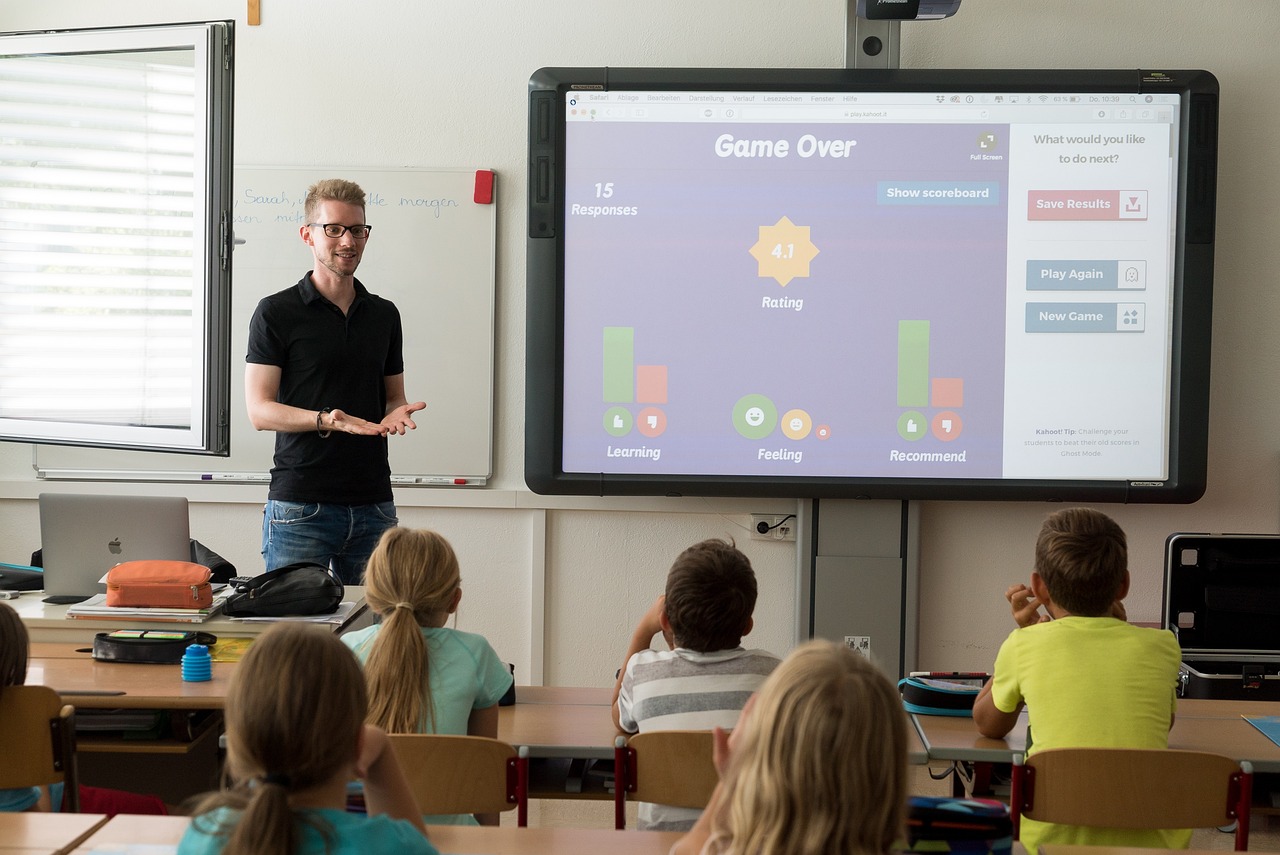
(Taken from: https://pixabay.com/photos/teacher-property-plant-and-teaching-3765909/) 

People have proposed the role of promoting teaching, and ideas it represents are philosophically inconsistent with most teachers' views on teaching and learning. Therefore, this is a good starting point. This does not mean that it is an easy role for teachers to perform. It is not the way most of us were taught and not the way we teach most of the time. Nevertheless, becoming a facilitator of learners is an important part of learner-centered.

 Learner-centered teachers work hard too, but they realize that students need to be working on learning-related tasks as well. They see the teacher´s primary task as facilitating or supporting the learning efforts of students. According to Biggs (2011), teachers must create a learning environment to promote learning activities so that students can obtain the desired learning outcomes.

In the classroom, we are always the center of action because we do not want to leave the opportunity to participate. Some teacher's roles are facilitator, manager, monitor, etc. Teachers play the role of facilitators however, this is not too good for students because of a codependency relationship and they are not going to develop their abilities. Tasks are done by teachers to make students work and to comprehend the topic, the teacher's job involves asking questions, solving problems, summarizing the class, giving extra material to facilitate students learning. Ethical responsibilities are involved in teachers’ lives. In some situations, students have bad behavior and they are in charge of giving a kind of solution.

From this chapter we were able to understand the role of the teacher and how a teacher has a set of skills and attitudes that are of great importance to the society in which he belongs, since his work helps to educate students who are immersed in the teaching-learning process. In view of this, it is necessary to mention that a teacher must be prepared for their main role, which is teaching. As future teachers, we know that we are going to play different roles such as planners, monitors, managers, assessors and mentors. However, these roles are useful and will be performed according to the curriculum and learners, because these roles are designed according to the needs of the learners, the class size, the abilities of the students, and their learning style.

In order to fulfill the role of a teacher we have to plan our classes, for example:

On the one hand, teachers should follow some steps in teaching. First, review the learned material and connect the prior knowledge with the new knowledge. Then, show how students apply the new material in real situations. It helps teachers keep the classroom active and controllable. For example, as future teachers, we will always monitor and guide them so that they can think critically.

On the other hand, there are some principles that can realize the role of teachers, that is, let students do more learning tasks instead of going to the syllabus, encourage students to learn from each other, and provide an effective group learning experience. Finally, let students create a learning atmosphere.

In conclusion, it is evident that the role of the teacher is fundamental in education and must be prepared to fulfill not only the role of teaching but also the role of being a guide for all his students.

(Video taken from: https://www.youtube.com/watch?v=vhA0yIgEDVU) 


Bibliography:

Spratt, M., Pulverness, A., & Williams, M. (2011). The Tkt, Teaching Knowledge Test, course: modules 1, 2 and 3. Cambridge University Press. 

Biggs, C. (2011). Teacher as Facilitator of Learning. Teaching and Learning Business Schools: Transforming Business Education.

Extra material:

The teacher as a facilitator for learning flipped classroom in a master’s course on artificial intelligence (N.o 2-13). (2017, enero). Norwegian University of Science and Technology, Ålesund, Norway. https://www.researchgate.net/publication/317108092_The_Teacher_as_a_Facilitator_for_Learning_-_Flipped_Classroom_in_a_Master’s_Course_on_Artificial_Intelligence

Unit 8 Speaking

  Unit 8 

Speaking 

(Taken from: https://pixabay.com/photos/businessman-man-afraid-angry-3036181/)

Speaking forms part of the four language skills. It is about producing language rather than receiving it.

Speaking is the use of speech to communicate meanings to others.

According to Spratt, Pulverness, & Williams (2011), there are some things that we usually do when speaking. For example, we pronounce words, we use the language to ask and give information as well as answering questions, to do that we need to know grammar and vocabulary, use of the word and sentence stress as intonation too. Sometimes we paraphrase the things we listen. Hesitation is another thing we do because the ideas come quickly and they do not stay for long.

Speaking and its subskills are the act of using grammar, vocabulary, and functions, and appropriately registered, connected speech, body language that is very important to express oneself, produce text types, fluency, and interaction with others. All these subskills are used to communicate something.

Some interactive strategies that help to express our speech such as body language that involves gestures, eye contact, facial expressions, and movements. Functions are required too, some reasons to speak are to clarify what a person wants to say, to ask others’ opinions, to agree, and to interact. Turn-taking in this strategy intonation and body language helps to know when the other participant can talk. When someone cannot understand the message, paraphrasing is one option to do.

The features of connected speech are necessary to convey messages such as intonation, stress, linking, and contractions. For successful oral communication, fluency avoids listeners to get bored and to understand the message without hesitation. Accuracy helps to deliver clear information. Appropriacy talks about the level of formality in which a speaker can feel comfortable in the situation he is. Text types are needed to develop a perfect conversation, there are phone calls, presentations, or tell a story.


(Video taken from: https://www.youtube.com/watch?v=CAU2zx2Ri_M)

From this Unit, I learned about speaking, this skill helps us to communicate what we think. In addition, it is very important to use body language to help listeners to comprehend the interaction. Hesitation is something that most speakers do, it is inevitable because we are thinking while speaking, and sometimes getting ideas is difficult. Appropriation is another feature that people have to develop and to be in a perfect time with the correct words.

As future teachers, Gantenhammer, D. (2015, November 12), recommend some activities.

One activity that we can use is storytelling. In this part, students will use body language to interpret it as well as intonation and stress in words and sentences to give the necessary impact of the story. 

Another activity can be impromptu speaking. This activity develops a turn-taking strategy because students will have a picture and a number in which they have to speak about it and respect their turn.


Bibliography

Spratt, M., Pulverness, A., & Williams, M. (2011). The Tkt, Teaching Knowledge Test, course: modules 1, 2 and 3. Cambridge University Press.

Gantenhammer, D. (2015, November 12). 12 Fun Speaking Games for Language Learners. https://www.edutopia.org/discussion/12-fun-speaking-games-language-learners.

Extra material:

Bolen, J. (2020, September 9). Kids ESL Speaking Games: Top 20: ESL Speaking Activity. https://eslspeaking.org/kids-esl-speaking-games/.

Bolen, J. (2020, October 21). Top 26 English Conversation Activities for Adults: ESL Conversation. https://www.eslactivity.org/top-7-english-conversation-activities-for-adults/. 


Unit 7 Listening

 Unit 7 

Listening 

(Taken from: https://pixabay.com/photos/headphones-headset-audio-technology-690685/)

Listening forms part of the four language skills. It is about responding to language rather than producing it.

Listening is in charge of making sense of what we hear.

To do this the student has to use the context, language, and knowledge of the world.

According to Spratt, Pulverness, & Williams (2011), there are some key concepts that a teacher must know to teach.

In spoken language, people are unconscious of what they are saying and the message disappears as fast as it is spoken. When we speak, we do not have a script of what we are going to say. Rather than we write, we can use complex grammar and it is on paper. Therefore, the process of understanding is available at that time. Spoken and written language have different features because they are developed in different circumstances.

A conversation can have many incomplete sentences, hesitations, simple words, and utterances.

There are different text types in spoken language for example stories, songs, conversations, lectures, etc. They can vary depending on the interaction, range of vocabulary, number of participants, and language organization.

Connected speech is also involved in listening to understanding; some futures are speeds of speech, stress, linked sounds, and the use of contracted words.

Listening subskills are required depending on the reason for listening.

Listening for gist or global understanding is about getting keywords to get the general meaning. Specific information as its name is to focus on the needs for example in an exercise requiring a phone number. Detail or infer attitude is to see the speaker’s attitude. Intensively it focuses on language use. Extensively is focused on listening for pleasure.

To understand listening a person has to go further than grammar, vocabulary, and functions. To do that is important to know from where the people are speaking because there are many accents from different countries.

(Video taken from: https://www.youtube.com/watch?v=7gYxrRQffLE)

From this Unit, I learned everything about listening. Listening has too many concepts in which every listener is involved to understand and to be able to communicate.  Learning inside the classroom is different in real-world environments. Some factors can be a challenge like accents, speed, some sounds that are connected, and the use of contractions. Another thing that I learned is that we have to know which sub skill is required to comprehend what is said.

These problems can be solved, future teachers, in the classroom; I can use many resources such as music, movies, conversations, or foreign people with a range of accents to develop listening skills in a kind of controlled environment.

Examples of listening in the classroom according to Doyle, A. (2014).

  1. In conversations with a native speaker in class, paraphrasing can help to develop listening and speaking skills because teachers are going to ask about the answers that students will hear.
  2. To increase confidence in listening, teachers can use simplified texts that are easier to comprehend and a filling-gap activity. Students are going to feel excited because they can do the task correctly.


Bibliography

Spratt, M., Pulverness, A., & Williams, M. (2011). The Tkt, Teaching Knowledge Test, course: modules 1, 2 and 3. Cambridge University Press.

Doyle, A. (2014) Important Active Listening Skills and Techniques. The Balance Careers. https://www.thebalancecareers.com/active-listening-skills-with-examples-2059684.

Extra material

Lim, K. Writing@CSU. https://writing.colostate.edu/guides/teaching/esl/listening.cfm.

Saricoban, A. (1999). The Teaching of Listening. http://iteslj.org/Articles/Saricoban-Listening.html. 


Unit 6 Writing

 Unit 6 

Writing 

(Taken from: https://pixabay.com/photos/writing-writer-notes-pen-notebook-923882//)

Writing forms part of the four language skills, it is a productive skill because we are going to produce something.

Writing is about communication through messages by making signs on a page. To do it, it is necessary to have a purpose and someone to whom is delivered. In addition, we must know how to do letters and words as well as how to join them in sentences with links and to be sure, that is going to be well communicated.

According to Spratt, Pulverness, & Williams (2011), there are some Key Concepts to take into account to deliver a writing class. Everybody has written at least a shopping list, a postcard, or short or long texts; these are text types they have different characteristics like just words, layouts, formality degrees, and text order. The complexity of grammar depends on the purpose of the writing.

Some subskills about writing are related to accuracy and related to communication. For accuracy, the part of spelling, letters, joining letters, legible, punctuation, layouts, choice of vocabulary, grammar, sentences, and use of paragraphs have to be correct to accomplish it. For communication, we have to be sure that style and register are appropriate, organization of ideas in a helpful way, the use of appropriate functions for example complaining, requesting, thanking, summarizing, narrating, and concluding. This helps the writer to have a well organized and focused paper.

There are stages of writing:

  1. Getting ideas for example a brainstorming activity.
  2. Organizing ideas.
  3. Drafting the first version of the work.
  4. Editing, in this part the writer has to correct and improve the text.
  5. Proofreading is focused on accuracy mistakes to correct.
  6. Re-drafting, this one is the final version.

As we can see, writing requires a lot of thinking processes to develop ideas, for example, a logical structure with topic sentences in each paragraph and cohesive devices to link sentences in a text.

(Video taken from: https://www.youtube.com/watch?v=WELJ-c8UXj4)

From this Unit, I learned about writing, the difficulty could vary depending on the level of students we have studied since school to write letters and to connect sentences. Linking is an important feature to take into consideration because without it we cannot understand the activities order written in the text, and the steps to follow to get perfect writing.

According to Elise, S. (2020, May 26), there are many activities that we can use as future teachers.

One activity is doing a comic book; students are required to use an appropriate function, level of formality, adequate layout. They will do everything unconscious because they are going to focus on the task.

Another activity is to make an essay and the teacher works with them as a guide with a template or an example. This helps students to be able to make mistakes and have quick feedback.


Bibliography

Spratt, M., Pulverness, A., & Williams, M. (2011). The Tkt, Teaching Knowledge Test, course: modules 1, 2 and 3. Cambridge University Press.

Elise, S. (2020, May 26). 10 Fun Writing Activities for Kids to Improve Writing Skills. My cup runs over. https://mycuprunsover.ca/fun-writing-activities-for-kids/.

Extra material:

MasterClass. (2020, October 2). 8 Creative Writing Exercises to Strengthen Your Writing - 2020. https://www.masterclass.com/articles/creative-writing-exercises-to-strengthen-your-writing.

Seifert, S. 5 Activities Guaranteed to Get Your Students Excited About ESL Writing Practice. https://www.fluentu.com/blog/educator-english/esl-writing-practice/. 


Unit 5 Reading


Unit 5

Reading


(Taken from: https://pixabay.com/photos/knowledge-book-library-glasses-1052010/)

Reading is a receptive skill. It involves understanding a written text and making it meaningful. In order to do this, the text must have two important characteristics, namely coherence and cohesion. Coherence is the logical organization and flow of thoughts in the entire text, meanwhile cohesion is the logical organization of the entire text.

Reading is a complex process that involves the use of different skills. It depends on the purpose of reading, which is why teachers must use them to promote learning. According to Spratt, Pulverness, & Williams (2011), in order to read something, we need to apply some subskills, such as scanning, skimming, reading for detail, inferring, deducing meaning from context and predicting.

In order to read a text and just find specific information we use a subskill called scanning.  On the other hand, skimming is a sub skill that involves reading for general understanding. A third sub skill is reading for detail that involves browsing the text to get an estimate of ​​its meaning. Inferring is another subskill used to get meaning from text. Readers can use other skills like deducing meaning from context that involves getting the meaning of unknown words based on surrounding words.

Additionally, according to Miller, (2017) there are 2 ways of reading: extensive reading and intensive reading. On one hand, extensive reading means the pleasure of reading long articles. On the other hand, intensive reading is reading for learning purposes, the purpose is to develop tasks or activities to develop reading skills. In order to apply this kind of reading knowledge to teaching, we must follow a process to teach. It is pre-reading, while reading and post-reading. In addition, readers need to distinguish between text types. Some of these text types are letters, postcards, articles, books, stories, poems, etc. Each text type has a different layout, theme and language usage.


Thanks to this unit, we were able to refresh our knowledge about reading and how to develop different reading subskills. We were able to use the key concepts and interpret it in examples, since as future teachers it is important to be able to teach how to develop the reading skill.

As future teachers, we can teach the reading skill in different ways, for example:

1. To apply different activities in order to develop the reading comprehension, for example students can make mind maps to summarize a reading in a creative way.

2. To apply reading tests to students to evaluate their reading comprehension in order to know if they need to review and to develop the reading subskills before mentioned.

In conclusion, it is important to learn and to teach reading because as future teachers the best thing we can do is to encourage students to read in what they are interested in and at the same time develop their reading skills by using reading strategies in class.

Bibliography:

Spratt, M., Pulverness, A & Williams, M. (2011). The TKT course. Cambridge, U.K.:         Cambridge University Press.

Miller, K. (2017). Extensive and intensive reading. Library.tsurumi-u.ac.jp. Retrieved       from http://library.tsurumi-u.ac.jp/metadb/up/admin/50_2_03_Miller.pdf


Extra material:

Didier, J. C. (s.f.). Strategic Reading (Bulding Effective Reading Skill). cambridge University .


Moreillon, J. (s.f.). Collaborative Strategies for Teaching Reading Comprehension:. Retrieved from google books: https://books.google.com.ec/books?id=VXnzdJxLp0YC&printsec=frontcover&dq=books+teaching+reading+strategies&hl=es&sa=X&ei=YGRBVY3eA4HRgwTTvYDoDQ&ved=0CBsQ6AEwAA#v=onepage&q=books%20teaching%20reading%20strategies&f=false

Unit 4 Functions


Unit 4

Functions

According to Spratt, Pulverness, & Williams (2011), a function is the reason why people can communicate, which means that everything we say has a specific purpose. For example, apologizing, requesting, clarifying, greeting, thanking, and advising are all functions of language. In addition, a function is a way of describing how we use language. Generally, functions are usually used by exponents, which is the language we use to represent functions. In order to describe a function of the exponent, we need to consider the context in which the exponent is used. Moreover, the exponent can show levels of formality, also called register, which are the following: formal exponent is the way people talk about important situations between people they don’t know each other, and informal exponent is the way people talk between friends or familiar people. In other words, people will not use the same register to talk to others in different situations. In addition, informal exponent is sometimes colloquial (casual and conversational) and neutral (between formal and informal exponents). When we use a level of formality that suits a situation we are referring to appropriacy. In addition, Maryellen (2013) said that function is related to certain factors, such as meaning potential, language function and context. Therefore, people who learn other languages ​​will learn these functions easily if they practice in real situations. Combining function and grammar helps to make grammar meaningful to learners and helps them learn functions with grammatical structure, which can then be used in other contexts.

(Video taken from: https://www.youtube.com/watch?v=LW7ziNQadvk)


Thanks to this unit, we were able to refresh our knowledge about language function and how it works with grammatical structures. We were able to use the key concepts and interpret it in examples, since as future teachers it is important to be able to communicate in different contexts.

As future teachers, we can teach functions in different ways, for example:

1. To perform role-plays and debates which students use in real context.

2. To practice transforming language from formal exponents to informal exponents and to neutral exponents.  This is a great way to raise awareness of different possibilities in the same exponent.

In conclusion, it is important to learn about functions because as future teachers the best thing we can do is to expose learners to multiple languages ​​and the context in which they can be used.

Bibliography:

Spratt, M., Pulverness, A & Williams, M. (2011). The TKT course. Cambridge, U.K.:         Cambridge University Press.

Maryellen W. (2013). Learner-Centered Teaching : Five Key Changes to Practice. John Wiley &        Sons, Incorporated.

Extra material:

Heine, B. and T. Kuteva (2002) World lexicon of grammaticalization. Cambridge: Cambridge University Press.

Bybee, J.L. and P. Hopper (eds.) (2001) Frequency and the Emergence of Linguistic Structure. Amsterdam: Benjamins.

Unit 3 Phonology


Unit 3

Phonology


According to Catford (2001), Phonology processes sound structure in various languages: the distinction of sound is used to distinguish language items, and the sound structure of "same" elements changes according to the changes of other sounds in the context.

According to Spratt, Pulverness, & Williams (2011), sound features like: phonemes, word stress and intonation are studied by phonology to communicate meaning. A phoneme is the smallest meaningful sound unit expressed in writing with phonetic symbols. The phonetic symbols are arranged in the phonetic chart. The phonetic chart is divided into 3 categories: consonants, diphthongs and vowels. There are: voiced sounds and unvoiced sounds. In words that are basically composed of phonemes, some syllables have greater pronunciation ability than others. This is called word stress. In English, stress also affects the pronunciation of sentences and incomplete sentences. Some content words have primary stress, secondary stress, and others are not stressed words. In addition to the above two features, connected speech also has other features, such as linking, contractions, and weak forms. These functions support the rhythm of oral expression. Intonation is a feature that involves an important section of pronunciation. Intonation is used to express emotions and attitudes, to emphasize or make certain things we say less important, and to convey the functions we say to others. After explaining the metalanguage used in phonology, the next topic involves teaching it. As English becomes a global language, English learners need to be able to understand multiple English accents, because there are speakers from many countries/regions and they must know the pronunciation of the learner

(Video taken from: https://www.youtube.com/watch?v=1JYahvKUvPU)


Thanks to this unit, we were able to refresh our knowledge of phonology. We were able to use the key concepts and interpret it in examples, since as future teachers it is important to differentiate different sounds to communicate and to improve our pronunciation.

As future teachers, we can teach phonology in different ways, for example:

1. To use different materials, exercises and activities which focus on hearing or producing different sounds. Teachers can use songs, conversations, oral presentations, etc.

2. To use flashcards with different minimal pairs to check pronunciation. In schools, there is a lot of confusion between minimal pairs, for this reason it is important to clarify how to distinguish these kinds of words.

In conclusion, it is important to learn and to teach about phonology as it helps teachers understand the different sounds that the English language has. Additionally, both the pronunciation of teachers and students must be clear to have good communication.

Bibliography:

Catford, J. C. 2001. A practical introduction to phonetics. 2nd edition. Oxford: University Press. Fox, Anthony 2002. Prosodic features and prosodic structure. The phonology of suprasegmentals.

Spratt, M., Pulverness, A & Williams, M. (2011). The TKT course. Cambridge, U.K.:         Cambridge University Press.

Extra material:

McMahon, April 2001. An introduction to English phonology. Edinburgh: University Press.

Roca, Iggy and Wyn Johnson 1999. A course in phonology. Oxford: Basil Blackwell.


Unit 10 The balance of power

    Unit 10 The balance of power Although most teachers are at least somewhat adapted to the idea of ​​a certain role change, which ...